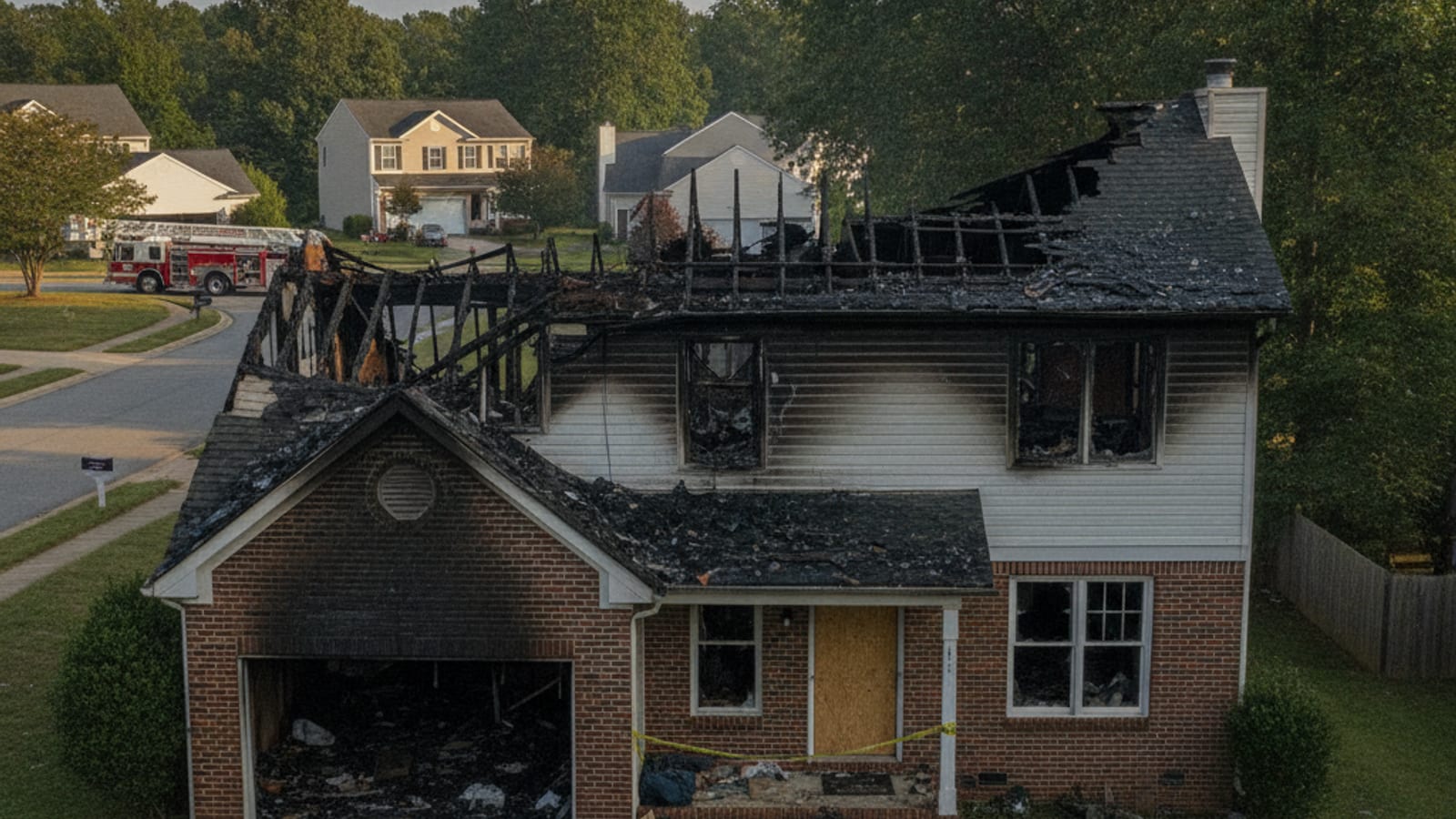
Rebuilding a burned house in Virginia runs through two sets of rules: the insurance policy and the local building code. Here is what each says, from the official sources, and where to get permits in each place FastIBuyer buys in. It is general information, not insurance or legal advice.
Virginia's standard fire-policy terms
Virginia law sets standard provisions for fire insurance policies (Va. Code § 38.2-2105). Your own policy's wording is what counts, so read it alongside these:
- Proof of loss within 60 days. Within sixty days after the loss, unless the insurer extends the time in writing, the insured gives the insurer a signed, sworn proof of loss.
- Two years to sue. A suit on the policy must be started within two years after the loss, and only once the policy's requirements have been met.
- Your lender's interest. When a loss is payable to a mortgage lender, the lender has its own interest in the policy, which can be cancelled by giving the lender ten days' written notice.
With a mortgage still on the house, the loan is paid off from the sale price at closing, as with any sale.
Damage reports and repair permits
Local building offices enforce the Virginia Uniform Statewide Building Code and issue the permits a rebuild needs. In Fairfax County, an owner or contractor can request a Damage Report from Land Development Services after a fire; the inspection sets out the scope of the damage and the work needed to rebuild, and some of that work requires permits or building plans (Fairfax County Land Development Services). Prince William County requires permits for removing or altering structural (support) members and for alterations to a house's plumbing, electrical, or heating and air conditioning systems (Prince William County), and the City of Manassas for repairing or replacing any required part of a fire- or smoke-rated assembly (City of Manassas). In Fredericksburg, a permit needed for corrective work must be obtained before the work starts (City of Fredericksburg).
Selling to FastIBuyer as the house stands means none of that is yours before closing: no damage report, plans or permits.
Where to get permits near you
Selling a fire-damaged house to FastIBuyer
- No cleanup, board-up or demolition first; FastIBuyer buys the house as it stands.
- Someone from FastIBuyer walks the property and makes a written offer that accounts for the damage.
- The insurance claim is between you and your insurer. Ask your insurer or attorney how a sale affects a claim that is still open.
- You pay no agent commissions; we buy directly, and you can close in as little as 7 days.
Frequently Asked Questions
Do I need to clean up or demolish before selling?
No. FastIBuyer buys the house in its post-fire condition, with no debris removal, board-up or demolition first.
Can I sell while the insurance claim is still open?
The house can be sold; the claim is a matter between you and your insurer under your policy. Before closing, ask your insurer or attorney how the sale affects a claim that is still open.
The house cannot be lived in after the fire. Can you still buy it?
Yes. A house that cannot be lived in can still be sold, and FastIBuyer buys it as it is.
Can I sell with a mortgage still on the house?
Yes. The loan is paid off from the sale price at closing, as in any sale. If the price does not cover the payoff, the lender has to agree to accept less.