
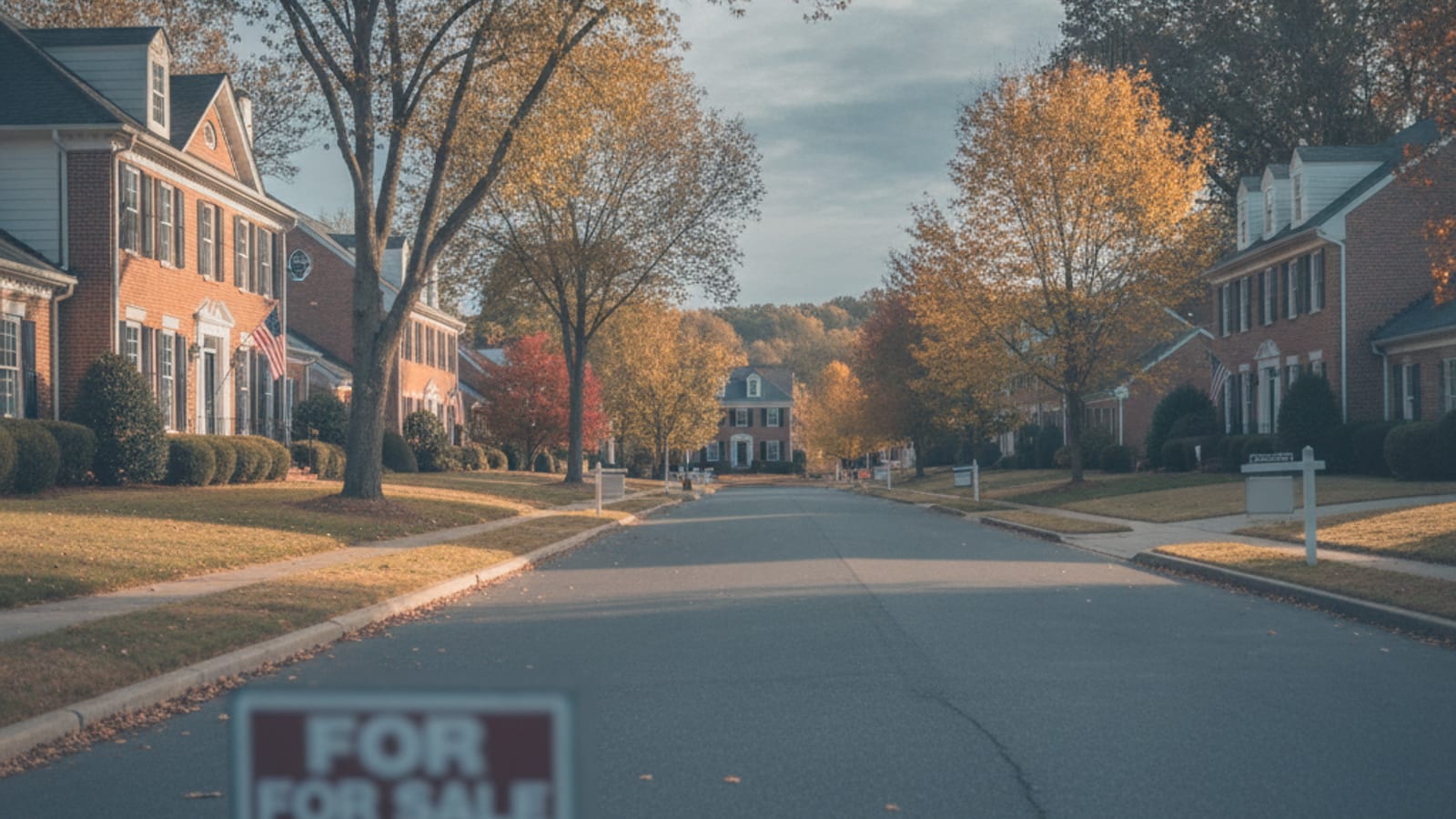
If you've been watching the news and asking yourself, are home prices dropping in Virginia? — you're not alone. Across Northern Virginia and the Fredericksburg corridor, more homes are for sale in 2026 than a year ago, and homes are spending longer on the market. The short answer is nuanced: prices haven't cratered, but the market is clearly shifting — and if you need to sell quickly, that shift matters more than the headline number.
What Do the 2026 Numbers Actually Show?
The most reliable way to answer whether home prices are dropping in Virginia is to look at verified, local data rather than national averages. Here is what Realtor.com data via FRED shows for three key counties in our region as of August 2026:
- Prince William County: Median listing price of $600,000, down 2.0% year-over-year. Active listings have climbed to 917 homes, up 17.1% year-over-year. Median days on market: 31 days, up 6.9% year-over-year.
- Stafford County: Median listing price of $599,450, down 1.7% year-over-year. Active listings reached 510, up a striking 27.2% year-over-year. Homes are sitting longer too, with a median of 39 days on market, up 5.4%.
- Spotsylvania County: Median listing price of $542,500, down 4.0% year-over-year, the largest decline of the three counties. Active listings are up 23.5%, and the median days on market rose 5.6% to 38 days.
The pattern that emerges is consistent: list prices are slightly lower than a year ago in all three counties, while inventory is growing meaningfully and homes are taking longer to sell. This is the textbook early stage of a buyer's market — not a crash, but a real recalibration.
Why Are Home Prices Dropping or Stalling Across Northern Virginia?
Rising inventory is the key driver behind the softening you're seeing. Several forces are pushing more homes onto the market at once. First, mortgage rates remain elevated — the 30-year fixed rate was 6.71% as of September 3, 2026, according to Freddie Mac via FRED. That rate makes move-up buying expensive, which suppresses demand even as more sellers list. Second, the federal workforce changes of 2025–2026 have led some homeowners in the Northern Virginia and Fredericksburg region to reassess their housing situations. Some are relocating; others are selling before an uncertain job picture forces a rushed decision later.
For a deeper look at whether this region has tipped into a buyer's or seller's market, see our full breakdown in Virginia Housing Market: Buyers or Sellers in 2026? — it covers demand indicators beyond just list prices.
Does "Prices Not Dropping" Mean Your Home Will Sell Easily?
Not necessarily. Median list prices are a lagging indicator — they reflect what sellers are asking, not what buyers are paying. For a measure that does not rely on asking prices, the Federal Housing Finance Agency's House Price Index tracks how the values of the same single-family homes change over time, using their repeat sales and refinancings, with figures for every state, Virginia included.
The more telling signals are days on market and active inventory, and both are moving in the same direction: more competition, longer waits. In Stafford County, for example, the median days on market was 39 in August 2026, up from 37 a year earlier, and a financed sale also depends on inspection, appraisal, and financing contingencies that can delay or end a deal.
For homeowners who need to sell — because of a job change, a divorce, an inherited property, looming foreclosure, or a home that needs work — waiting on a traditional sale is often not an option. That's where understanding your alternatives becomes critical. Knowing the best month to sell a house in Virginia can also help you time a traditional listing more strategically.
What Are Your Options If You Can't Wait Out a Shifting Market?
If the market data above has you concerned about timing, here are the realistic paths forward for homeowners in Northern Virginia and the Fredericksburg region:
- List with an agent and price aggressively. In a rising-inventory environment, overpriced homes sit. If you go the traditional route, price at or slightly below comparable sales — not at the peak of 2022 valuations.
- Make repairs and updates. Buyers in a less frenzied market have more choices. Homes that need work are being passed over unless they're priced to reflect it.
- Sell as-is to a cash buyer. This sidesteps repairs, showings, financing contingencies, and the waiting game entirely. A reputable local cash buyer can close in as little as 7 days, with no agent commissions, no repair costs, and no open houses. The trade-off is a below-market offer, so compare it with what a listing would net you after price reductions and holding costs.
If you're weighing whether a cash offer makes financial sense, our guide on who offers the most cash for homes in Northern Virginia walks through how offers are calculated and what to watch out for.
How the Cash Sale Process Works in Virginia
Many homeowners assume selling for cash means accepting a lowball offer from a faceless corporation. Working with a local buyer is quite different. Here's how the process typically looks:
- Step 1 — Request an offer: Share basic details about your home (address, condition, situation). No obligation, no hard sell.
- Step 2 — Property review: The buyer does a quick walkthrough or virtual assessment. No repairs, cleaning, or staging needed.
- Step 3 — Receive a written cash offer: You can take it, negotiate, or walk away — no pressure.
- Step 4 — Choose your closing date: Close in as little as 7 days, or on a timeline that works for you. You pay no agent commissions; ask the buyer which closing costs you pay as the seller.
This process works for virtually any property condition or seller situation — whether you're facing foreclosure, dealing with an inherited home in probate, relocating for a PCS move, or simply selling a house that needs more work than you can manage. If you want to understand the full timeline in more detail, our Northern Virginia fast-sale timeline guide covers every step from first contact to closing day. Not sure if a cash buyer is legitimate? Our guide to whether "We Buy Houses" companies are a ripoff or legit gives you a clear, honest breakdown.
The Local Bottom Line: Where Does This Leave Virginia Sellers?
Virginia home prices are not in freefall — but the "sell anything at any price" era of 2021–2022 is definitively over. In Prince William and Stafford counties, list prices are slightly lower than a year ago (down 2.0% and 1.7%) while competition has increased sharply. In Spotsylvania, the decline is larger, at 4.0%. Across the board, sellers face more inventory competition and longer timelines than a year ago.
For homeowners with time and a move-in ready home, the traditional market still works — it just requires more patience and sharper pricing. For everyone else, a cash sale to a local buyer remains one of the fastest and most certain ways to convert your home's equity into cash without waiting out a market correction or sinking money into pre-sale repairs.
If you're in Alexandria, Arlington, Woodbridge, Manassas, Stafford, Fredericksburg, or anywhere else in the region and want to know what a no-obligation cash offer looks like for your specific home, FastIBuyer can give you a straightforward answer — no pressure, just a real number so you can make an informed decision.