
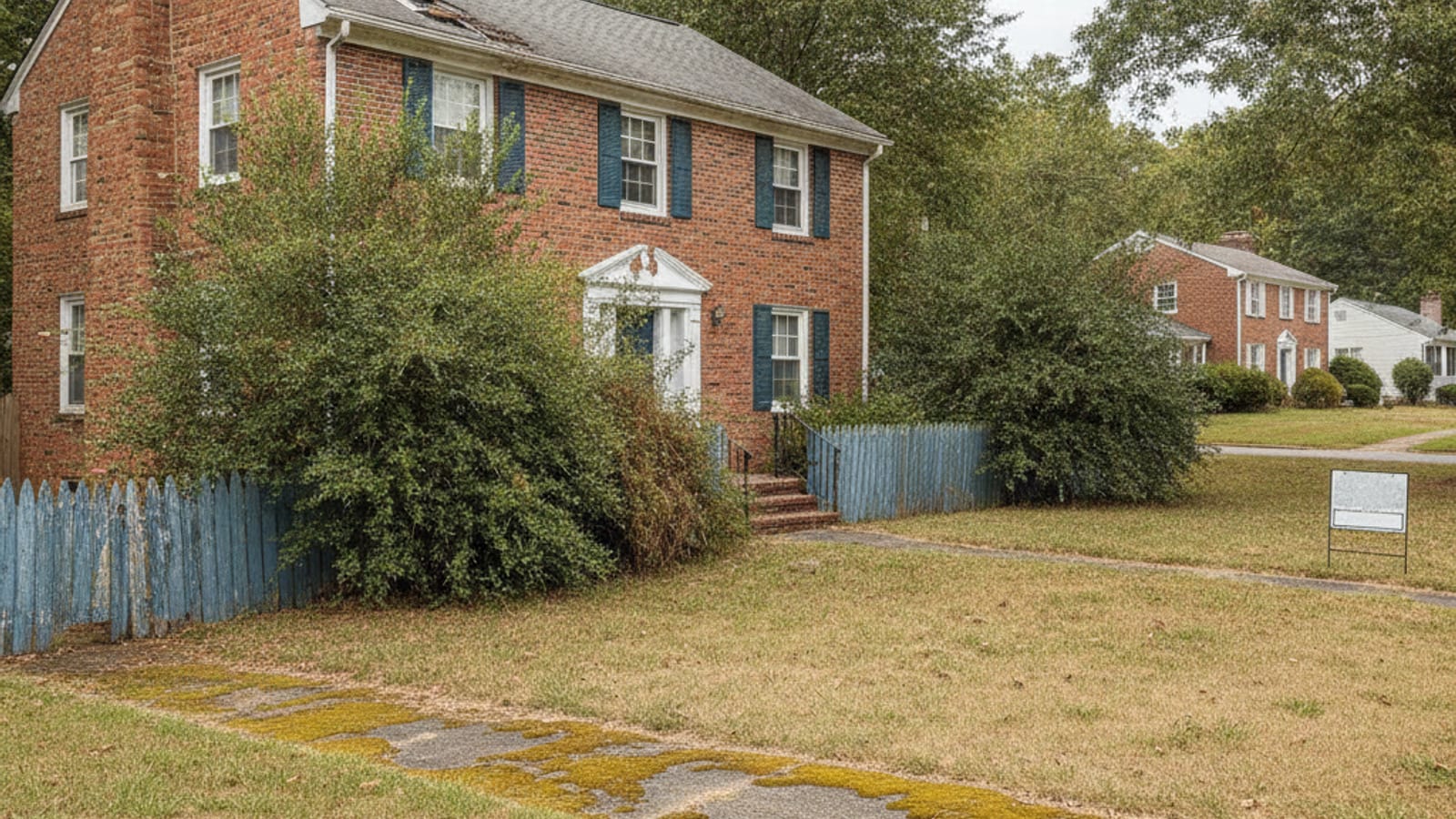
Not every home in Fairfax County is ready for a magazine-style listing — and that's completely okay. If you're looking to sell your house as-is, you're not alone: maybe you inherited a dated rambler in Annandale, you're holding a fixer-upper in Herndon that needs a new roof and updated electrical, or the repairs your Reston townhouse requires simply cost more than you're willing to spend before selling.
Selling a house as-is in Fairfax County, VA is a legitimate, increasingly common path — but it's also one of the most misunderstood concepts in real estate. This expanded guide covers what "as-is" actually means under Virginia law, exactly what you still have to disclose, how local market conditions in 2026 affect your pricing expectations, and how to choose between a traditional listing and a direct cash sale — so you can make the right call for your situation.
What Does It Mean to Sell a House As-Is in Fairfax County, VA?
Selling as-is means you are offering the property in its present condition and you will not be making repairs, replacements, or cosmetic improvements as a condition of the sale. The buyer accepts the home with all of its known and visible faults — the aging HVAC system, the water-stained ceiling, the cracked driveway — and agrees not to ask you to fix them after a home inspection. It's a simple concept, but sellers often misunderstand two things about it.
First, selling as-is does not give you legal cover to hide known defects. Virginia's disclosure framework still applies (more on this below), and actively concealing a material defect can expose you to legal liability even in an explicit as-is sale. Second, as-is does not automatically mean a deeply discounted price. A well-located home in Vienna, Centreville, or Burke can sell as-is for a fair market price — condition is only one factor among many. Location, lot size, square footage, and local demand all influence what a buyer will pay.
Virginia Disclosure Rules: What As-Is Sellers Still Have to Share
Virginia is largely a caveat emptor ("buyer beware") state, which surprises many sellers. The Virginia Residential Property Disclosure Act generally requires sellers to provide a standard Residential Property Disclosure Statement — a document that largely directs buyers to conduct their own due diligence and check public resources for flood risk, zoning classifications, and nearby registered sex offenders, rather than obligating sellers to enumerate every condition in the house.
That said, there are important carve-outs and obligations that as-is sellers in Fairfax County should understand:
- Federal lead-paint disclosure: For homes built before 1978 — which includes a large share of properties in Annandale, Falls Church, and older parts of Vienna — federal law requires a Lead-Based Paint Disclosure form and a ten-day window for the buyer to conduct testing. This applies regardless of as-is status.
- No active concealment: Even in an explicit as-is sale, you generally cannot deliberately hide or misrepresent a known material defect. If you've had a structural engineering report done, painted over mold, or received written notice of a code violation, that knowledge matters legally.
- HOA and condo disclosures: Many Fairfax County neighborhoods — particularly townhome and condo communities in Reston, Herndon, and Springfield — are governed by homeowners associations. Virginia law requires sellers to provide HOA disclosure packets, which buyers have a right to review and cancel over.
- Exemptions for certain sales: Foreclosure sales, some estate sales, and certain new-construction transfers may be partially exempt from the standard disclosure act — but the lead-paint rule and the prohibition on active fraud still apply.
The practical takeaway: selling as-is protects you from repair negotiations, not from honesty obligations. When in doubt, disclose — it's always safer than omitting.
The Fairfax County Market in 2026: What As-Is Sellers Need to Know
Understanding local market dynamics helps you set realistic expectations before you list or accept an offer. Fairfax County sits in the heart of Northern Virginia's competitive real estate corridor, where demand from federal employees, defense contractors, and tech workers has historically kept prices elevated. However, conditions are shifting. With the U.S. average 30-year mortgage rate at 6.69% as of August 2026 (Freddie Mac via FRED), buyer purchasing power has been squeezed — and buyers who can still afford to purchase are increasingly choosy about condition.
In neighboring Prince William County, the median listing price reached $619,200 in July 2026 (Realtor.com via FRED), up just 1.2% year-over-year, while active listings climbed 10.1% over the same period. That rising inventory tells a clear story: sellers across Northern Virginia are competing harder for a smaller pool of qualified, rate-sensitive buyers. For an as-is property — particularly one that needs significant work — that means retail buyers may be harder to attract, and days on market can stretch well beyond the county average if the home isn't priced to reflect its condition from day one.
This is exactly the environment where a direct cash sale often makes the most financial sense for as-is sellers who need to move quickly and cleanly. If you have a tenant-occupied property in addition to condition challenges, you may want to read our guide on selling a tenant-occupied house in Fairfax County for additional considerations specific to that situation.
Your Two Main Paths: Traditional Listing vs. Cash Buyer
When you decide to sell house as-is in Fairfax County, you essentially have two routes. Here's how they compare honestly:
- Traditional MLS listing, priced as-is: You work with a real estate agent, list on the open market, and market the home explicitly as-is. You may attract investors, flippers, or handy owner-occupants. The upside is potential for a higher gross sale price. The downsides: you'll still pay 5–6% in agent commissions, the process typically takes 45–90 days from list to close, and buyers financing with a mortgage may face appraisal issues if the property has significant deferred maintenance. Deals can fall apart during inspection even when marketed as-is, because lenders — not buyers — sometimes require certain repairs to fund the loan.
- Direct sale to a cash home buyer: Companies that buy houses as-is in Fairfax County (sometimes called iBuyers or cash investors) purchase the property directly from you, in any condition, with no repairs required. There are no agent commissions, no open houses, and no waiting on a bank appraisal. The trade-off is that cash offers are typically below full retail — buyers factor in their repair costs and profit margin. But when you subtract commissions, carrying costs, repair expenditures, and the time value of a prolonged listing, the net difference is often much smaller than sellers expect. For a deeper look at how offer amounts are calculated, see how much cash home buyers pay in the DMV.
How Does the As-Is Cash Sale Process Work?
If you're leaning toward a direct cash sale — which many Fairfax County sellers find simpler and faster — here's what the process typically looks like with a reputable buyer:
- Step 1 — Request a free offer: You share basic details about the property (address, condition, your timeline). No obligation, no cost.
- Step 2 — Property walkthrough: A local buyer representative schedules a brief walkthrough — usually within 24–48 hours. This is not a formal inspection designed to kill deals; it's simply to confirm the property's condition before making a written offer.
- Step 3 — Written cash offer: You receive a no-obligation written offer, typically within 24 hours of the walkthrough. A trustworthy buyer will explain how they arrived at the number and answer your questions honestly.
- Step 4 — You choose the closing date: If you accept, you pick a closing date that works for you — often as little as 7 days, or several weeks out if you need more time to make arrangements.
- Step 5 — Close and receive funds: Closing happens at a local title company. You sign, the title transfers, and you receive your funds — no repairs made, no agent fees deducted, no last-minute renegotiations.
This process is the same whether your home is a dated split-level in Burke, a water-damaged colonial in Centreville, or a probate property in Springfield. For sellers dealing with an inherited property anywhere in Northern Virginia, our overview of probate home sales in Virginia walks through the additional legal steps that may apply before you can close.
Common As-Is Situations We See in Fairfax County
There is no single profile of an as-is seller. The situations we encounter most often in Fairfax County include:
- Inherited homes — often older properties in Annandale, Springfield, or Vienna that haven't been updated in decades and require significant investment to meet current buyer expectations.
- Major deferred maintenance — roofs, HVAC systems, foundations, or plumbing that would cost $30,000–$80,000 or more to repair before a traditional listing.
- Fire or water damage — even partial damage can disqualify a home from conventional financing. If your property has suffered serious damage, our guide on selling a fire-damaged house in Virginia covers your options in detail.
- Divorce — when both parties need a fast, clean resolution without the stress of renovation projects and extended listings. Our resource on selling a house during divorce in Arlington addresses many of the same legal dynamics that apply across Northern Virginia.
- Foreclosure risk — sellers who need to close before a trustee sale date and can't afford to wait 60–90 days on the open market.
- Relocation or PCS moves — common in Fairfax County given its proximity to the Pentagon, Fort Belvoir, and other federal installations.
Should You Sell As-Is in Fairfax County Right Now?
In a market where inventory is rising and mortgage rates remain elevated — making each buyer harder to attract — an as-is property on the open market needs to be priced sharply and marketed honestly to move. If you have the time, the resources, and the stomach for uncertainty, a traditional as-is listing might yield a higher gross number. If you need certainty, speed, and simplicity — especially if repairs would cost tens of thousands of dollars you don't want to spend — a direct cash offer is worth exploring seriously. The best approach is to get a no-obligation cash offer first, then compare it honestly against what a realistic net sale through an agent would look like after commissions, time on market, and any concessions you'd likely make anyway.
If you're ready to find out what your Fairfax County home is worth as-is — in its current condition, with no repairs — request a free, no-pressure cash offer today. There's no obligation, no cost, and no sales pitch. Just a straightforward number you can use to make the best decision for your situation.